Shepherdia canadensis
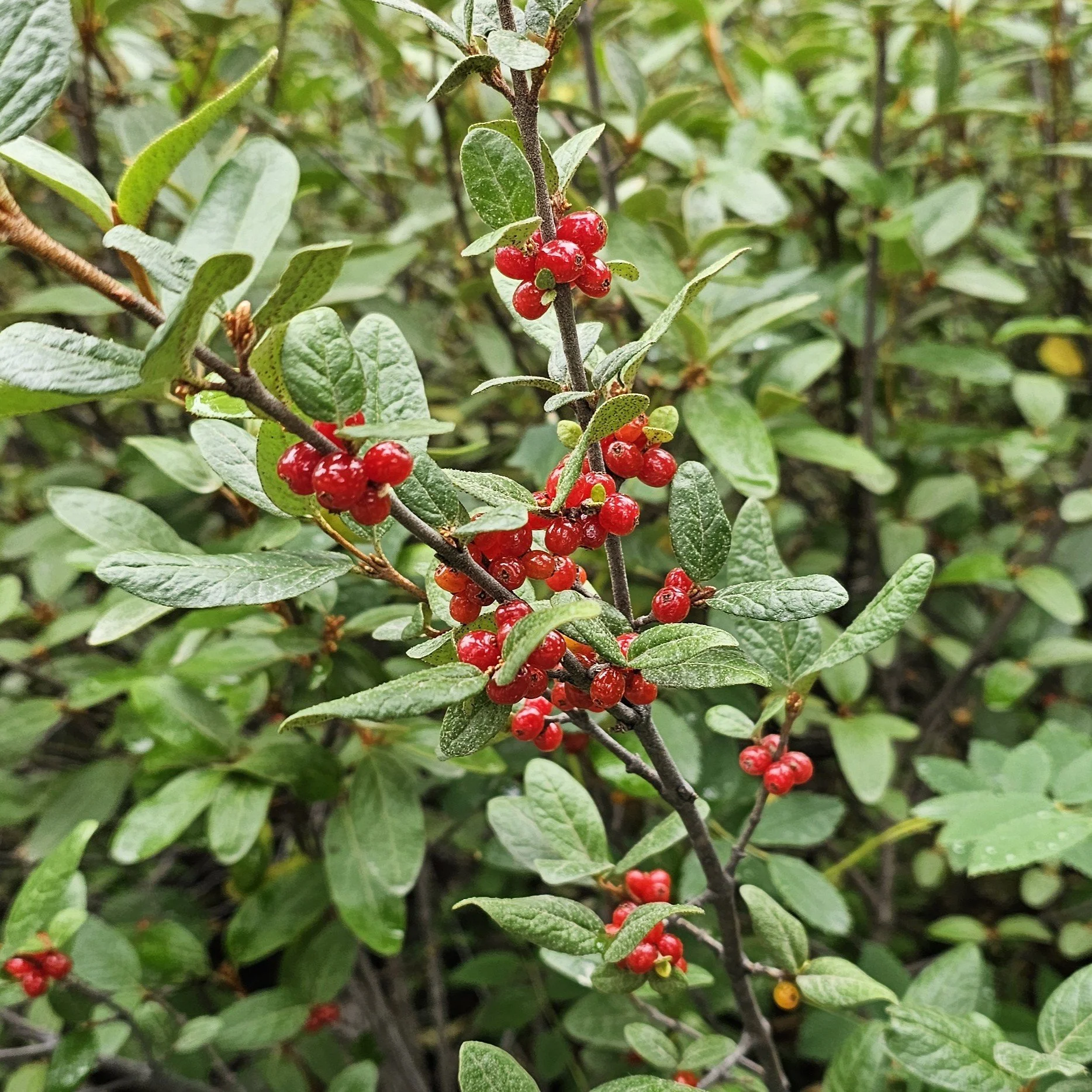
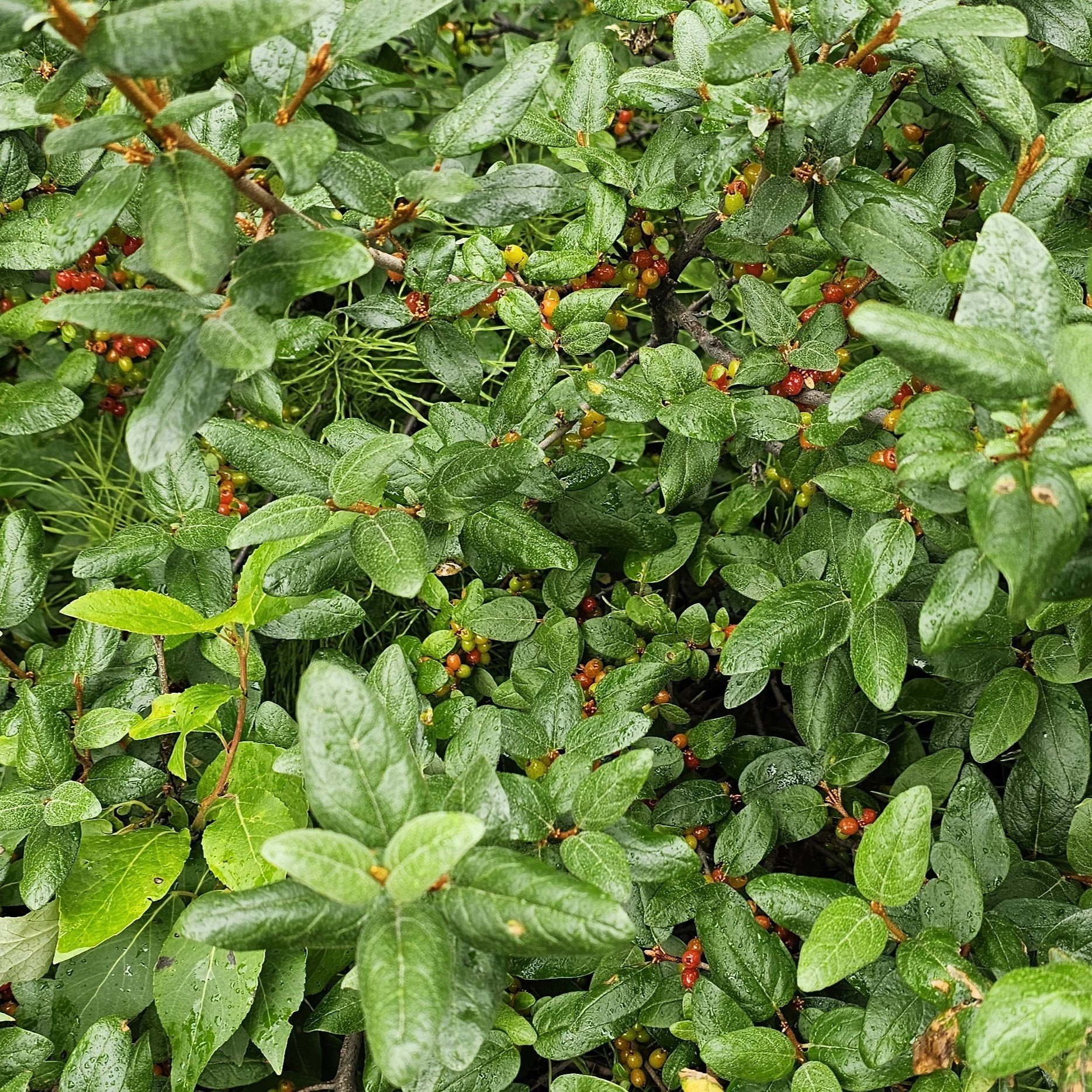
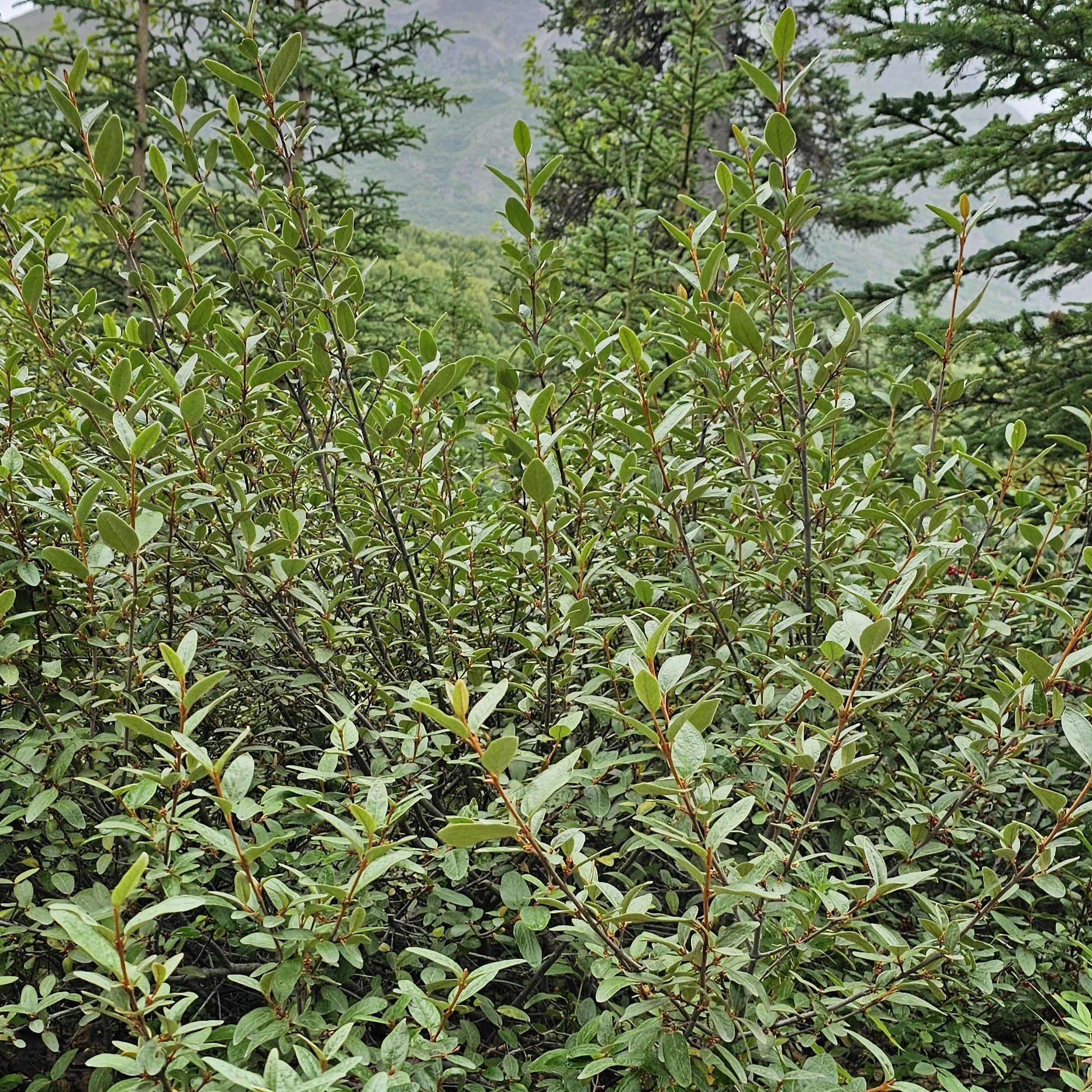
Soapberry is a hardy deciduous shrub with many common names, including Canada Buffaloberry, russet buffaloberry, soopolallie, and foamberry. Native to the boreal forests of northern North America, Soapberry is a common understory plant throughout Canada, Alaska, and high elevation, alpine ecosytems in the Pacific Northwest. A close relative to plants like Autum Olive (Elaeagnus umbellata) and Sea Buckthorn ( Hippophae rhamnoides), Soapberry is a nitrogen-fixing, thicket-forming shrub. Plants are highly ornamental, sporting silvery foliage, russeted stems, and attractive and edible red berries.
Soapberry fruit have a foamy texture, which is how the plant has earned its moniker. They have a long history of use by native peoples, including in the so-called “eskimo ice cream”, a traditional treat made of whipped fat, meat, berries, and snow made by Alaska Native peoples.
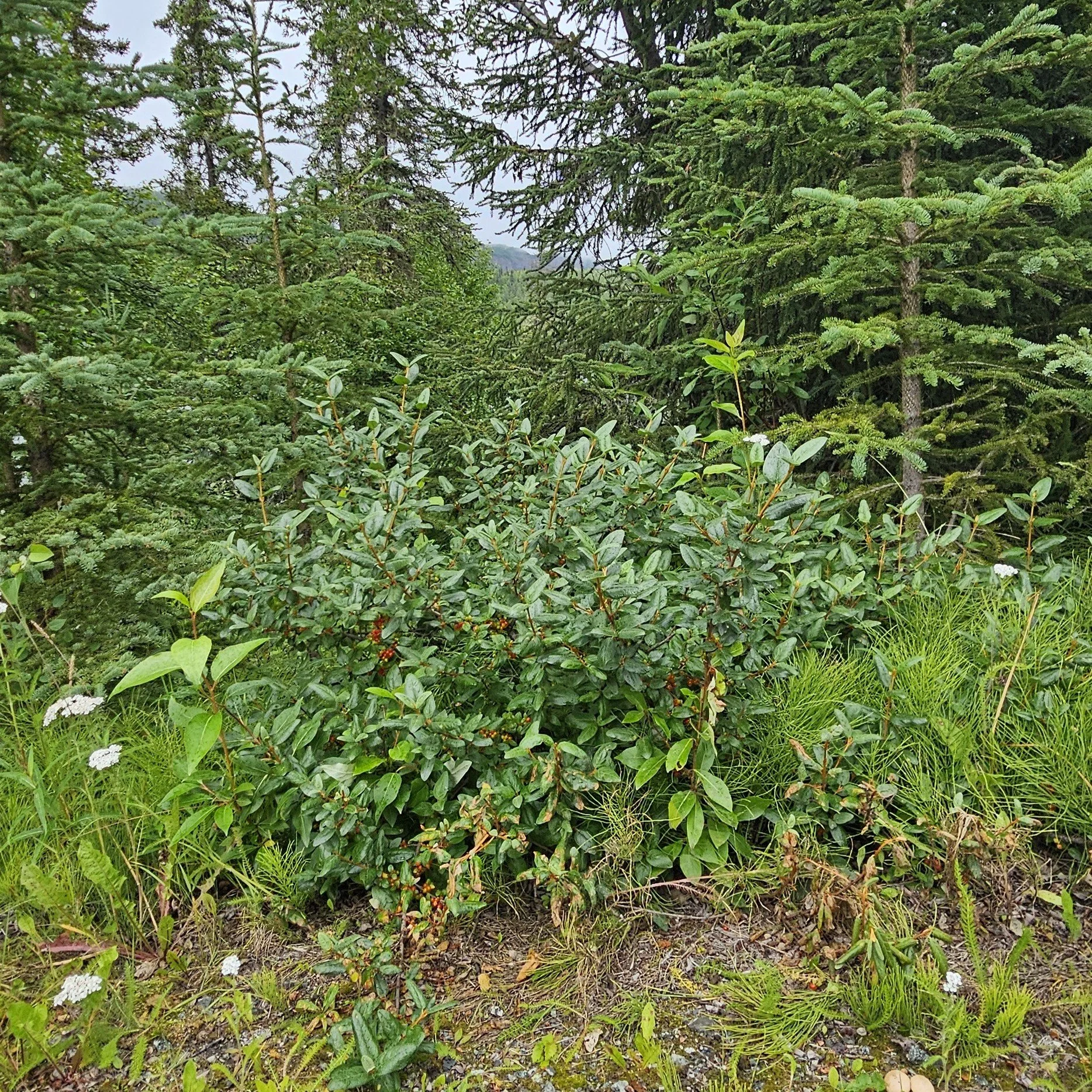
Soapberry plants grow between three and ten feet high and wide and are either male or female. In a garden setting, we recommend giving these part sun, good drainage, and regular irrigation. This species is somewhat drought tolerant when established and is a wonderful choice for erosion control on slopes.
Cold hardy to USDA zone 3 or to -40 degrees Fahrenheit
For sale are packets of 20 seeds
Shepherdia canadensis
Soapberry is a hardy deciduous shrub with many common names, including Canada Buffaloberry, russet buffaloberry, soopolallie, and foamberry. Native to the boreal forests of northern North America, Soapberry is a common understory plant throughout Canada, Alaska, and high elevation, alpine ecosytems in the Pacific Northwest. A close relative to plants like Autum Olive (Elaeagnus umbellata) and Sea Buckthorn ( Hippophae rhamnoides), Soapberry is a nitrogen-fixing, thicket-forming shrub. Plants are highly ornamental, sporting silvery foliage, russeted stems, and attractive and edible red berries.
Soapberry fruit have a foamy texture, which is how the plant has earned its moniker. They have a long history of use by native peoples, including in the so-called “eskimo ice cream”, a traditional treat made of whipped fat, meat, berries, and snow made by Alaska Native peoples.
Soapberry plants grow between three and ten feet high and wide and are either male or female. In a garden setting, we recommend giving these part sun, good drainage, and regular irrigation. This species is somewhat drought tolerant when established and is a wonderful choice for erosion control on slopes.
Cold hardy to USDA zone 3 or to -40 degrees Fahrenheit
For sale are packets of 20 seeds