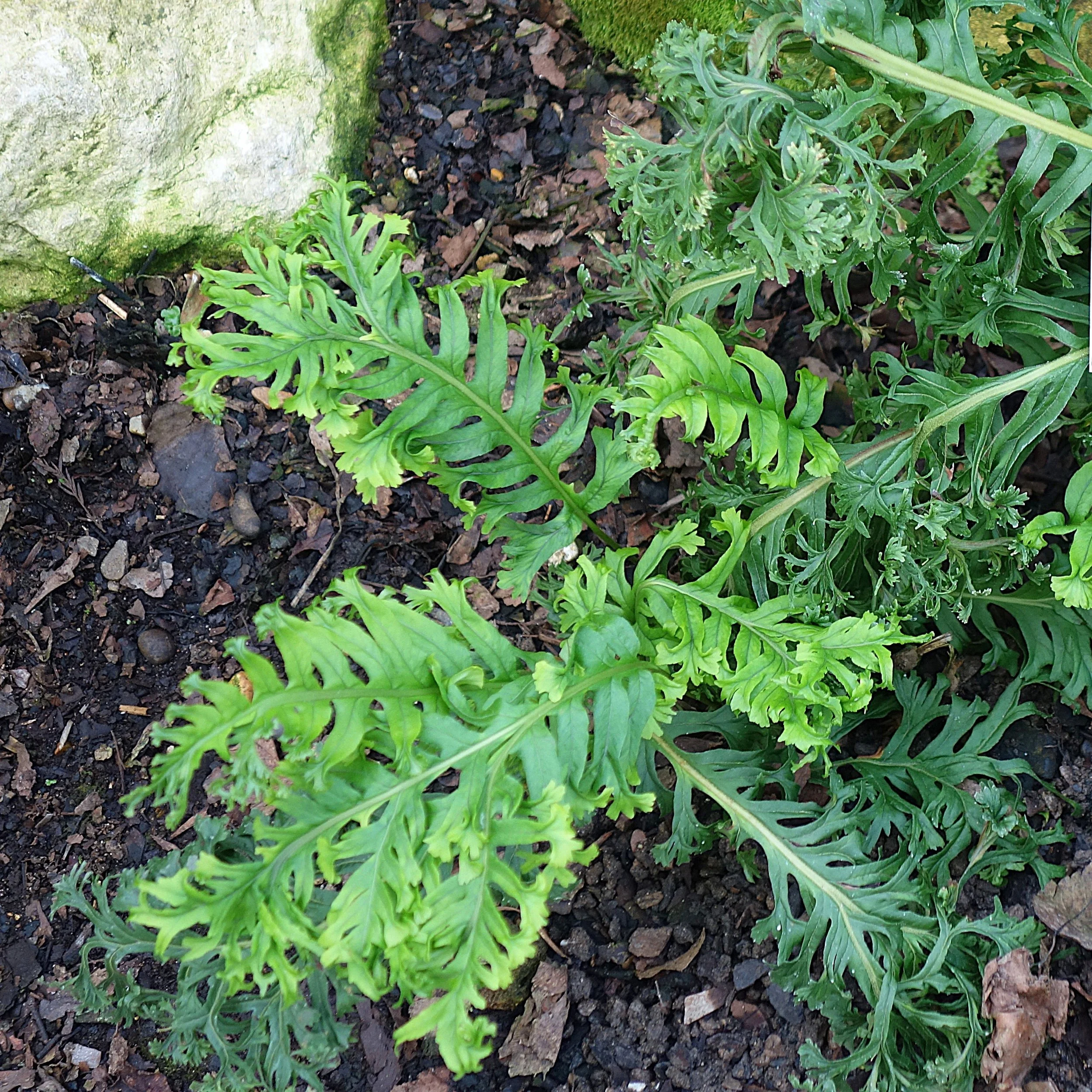
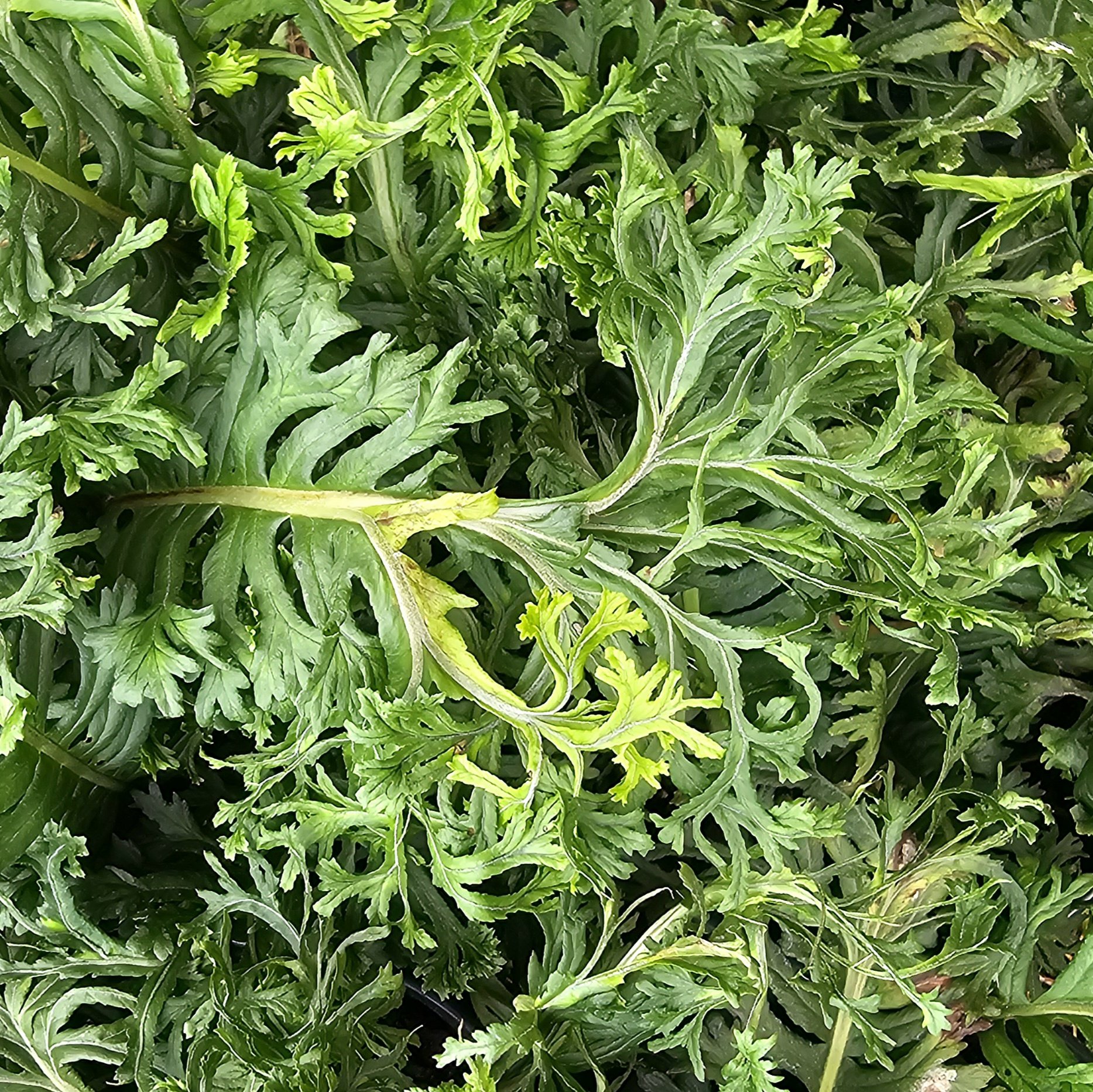
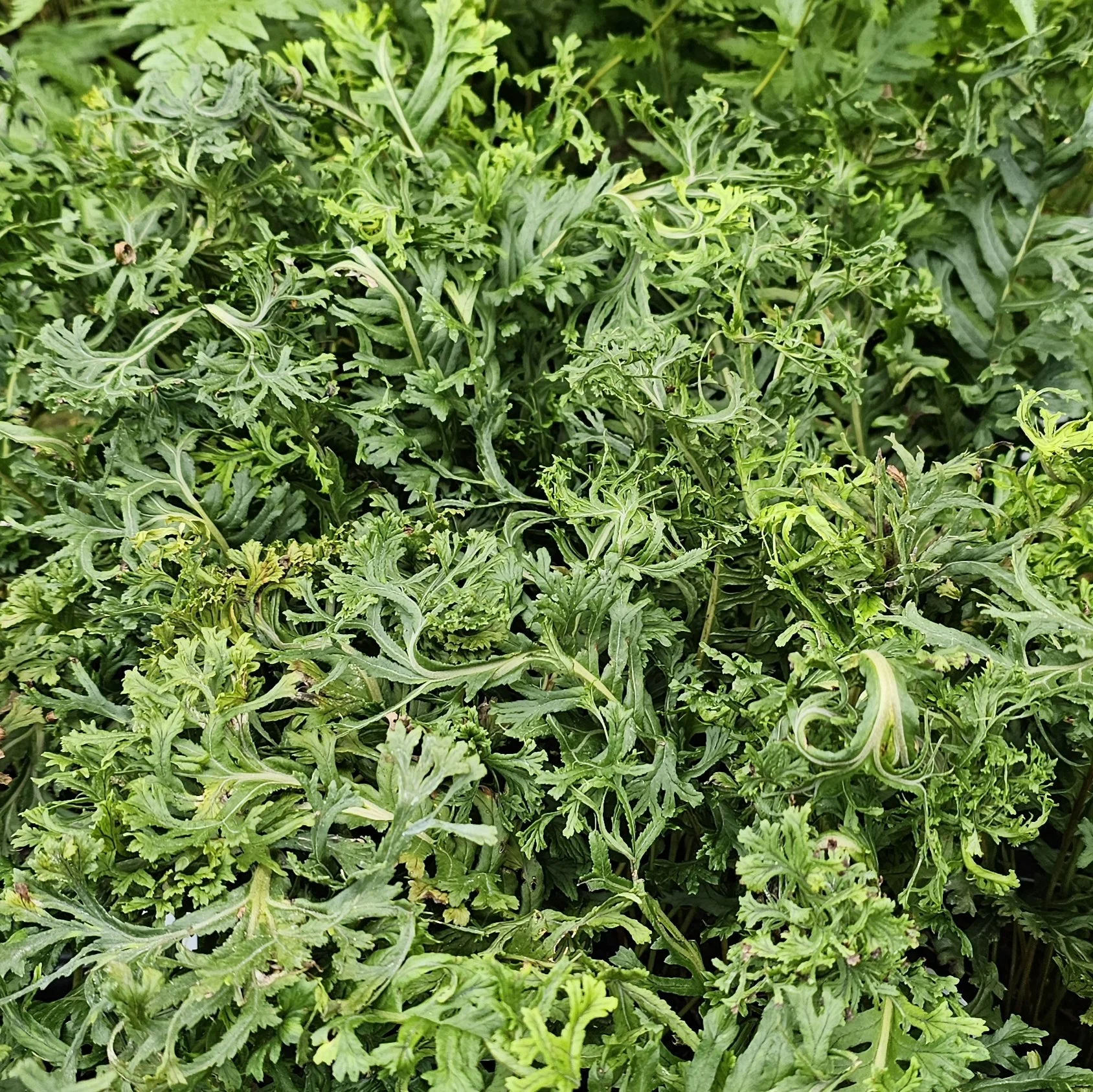
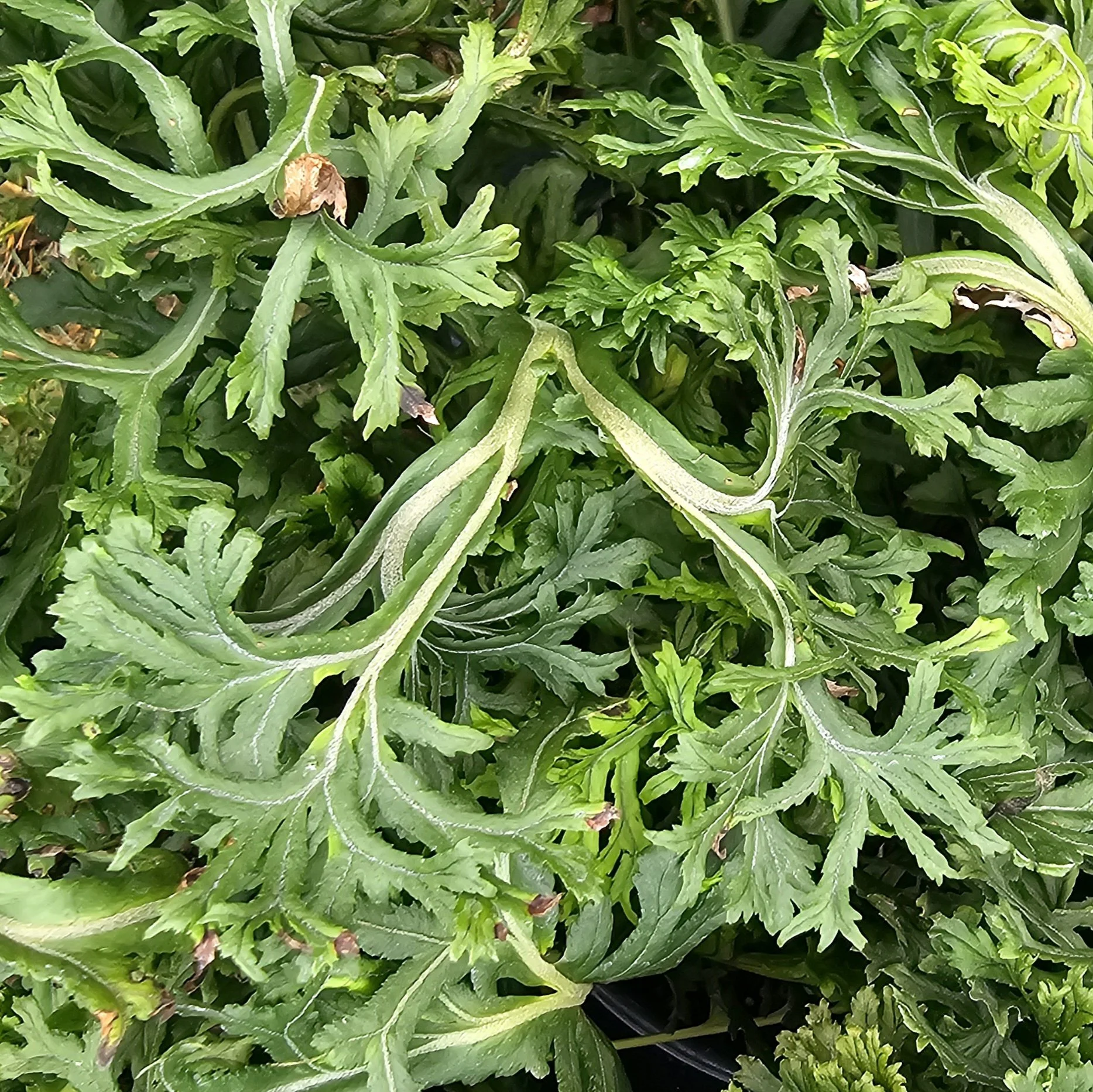
Polypodium glycyrrhiza 'Lawrence Crocker'
This interesting, crested form of Licorice Fern was a selection made by Lawrence Crocker of the Siskiyou Rare Plant Nursery, which closed in 2005. Since then, it has been given several names including ‘Grandiceps’ and ‘Diane’. Compared to the standard for this species, ‘Lawrence Crocker’ has densely crested foliage with wavy, ruffled leaves that are wide and lax. We find that it makes a graceful and adaptable groundcover food woodland plantings, borders, or shade gardens. Licorice Fern is a unique fern native to the Pacific Northwest that garners its name from its sweet, licorice flavored rhizomes that have a long history of culinary use.
Plants will reach about one foot in height and are slow-growing, but will eventually form colonies. We recommend avoiding full sun and especially hot exposures. Will tolerate quite heavy shade. Like many Polypodium species, this plant tends to be summer deciduous unless well-watered.
Cold hardy to USDA zone 5a or to -20 degrees Fahrenheit.
For sale are one gallon plants